Your campus's biggest wellness crisis fits in your pocket.

0
days a year lost to social media on average
0
higher depression risk in heavy social media users
0
of young adults think they use their phone too much
0

Return to Now is a digital wellness benefit that helps build healthier digital habits. No surveillance. No pressure. Just genuine support for change.

The problem

Young people are struggling with social media. It isn't a willpower problem.

The apps on your students' phones were engineered by behavioral scientists to be as hard to put down as possible.

The toll shows up in the classroom: higher anxiety, poorer sleep, shorter attention spans. You can't policy your way out of it. But you can give your students something that actually helps.

3–4
hours per day
The average student spends 3 to 4 hours daily on social media. That's more time than most students spend in class. Your campus is no exception.
58%
of college students would prefer a world without Instagram
25min
average cognitive focus lost after a single social media session
How it works

A few small interventions that actually change behavior.

Step 01

First, find a reason to change.

Change without a real reason doesn't last. The app helps each individual name what they actually want: better sleep, being present with the people they care about, or progress towards a goal. That becomes the anchor.

Step 02

The widget intercepts the reflex.

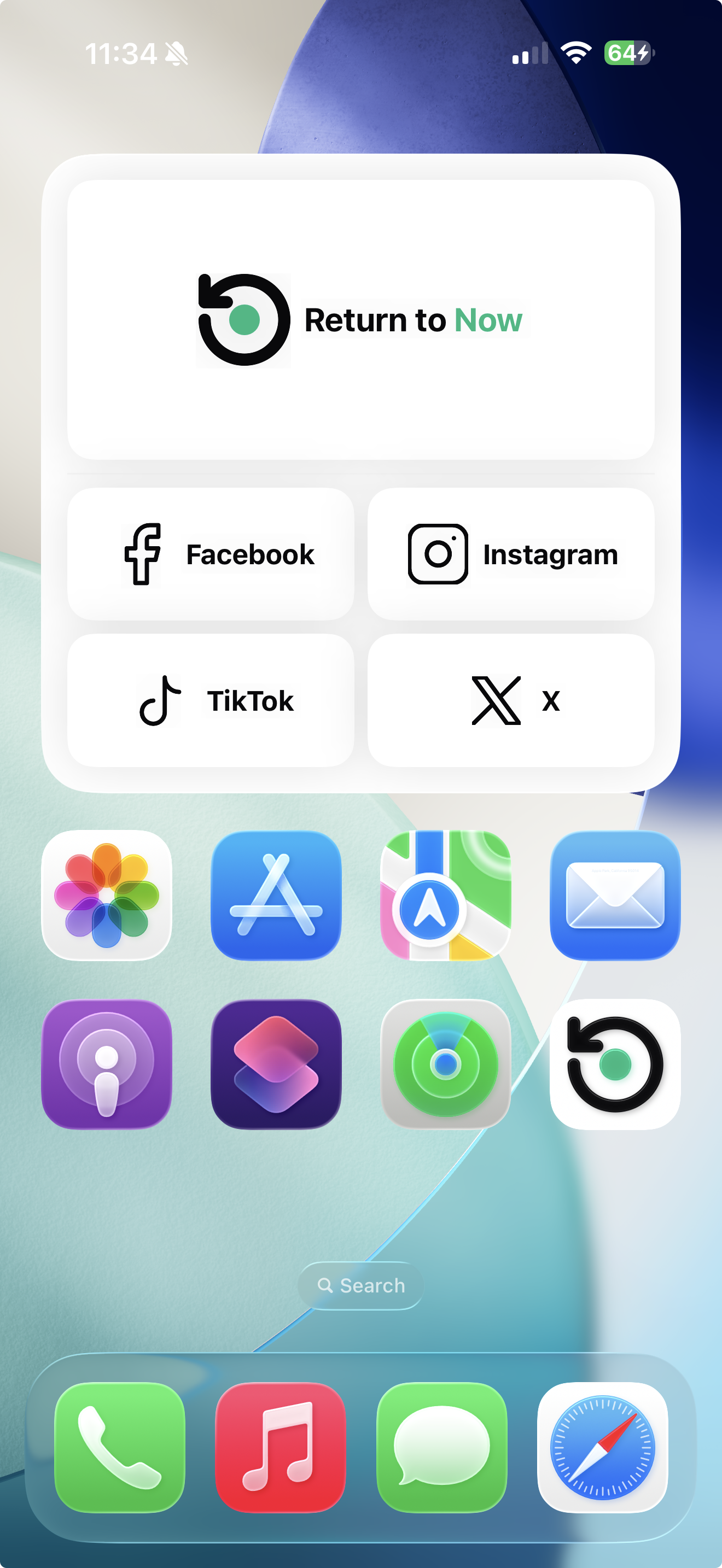
Most social media sessions start without a conscious decision. A home screen widget intercepts that moment, replacing app icons with Return to Now. One pause before the app opens is where change begins.

Step 03

Set an intention before opening.

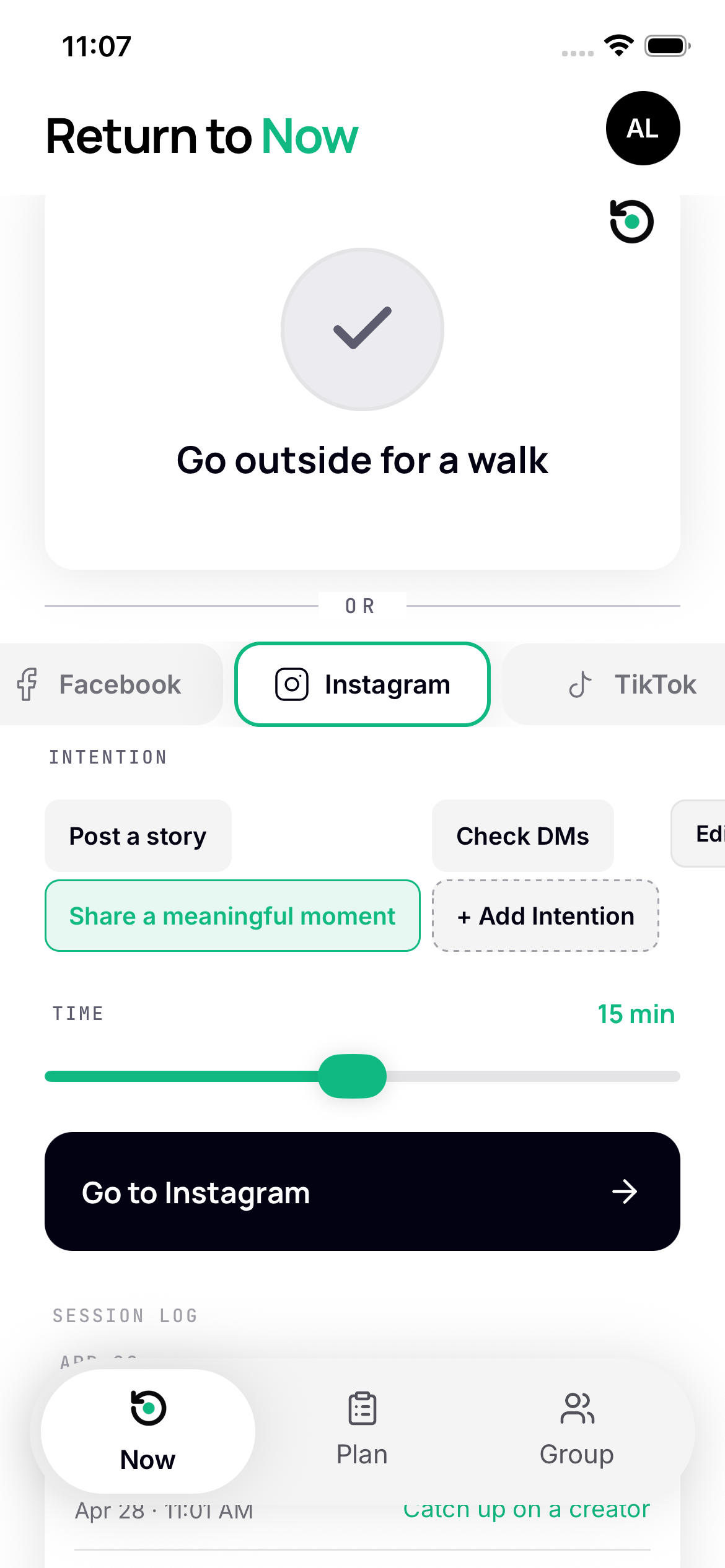
A quick prompt asks two things: why they're opening the app, and how much time it's actually worth. That decision, made before they enter, is what separates intentional use from mindless scrolling.

Step 04

The session ends with one honest question.

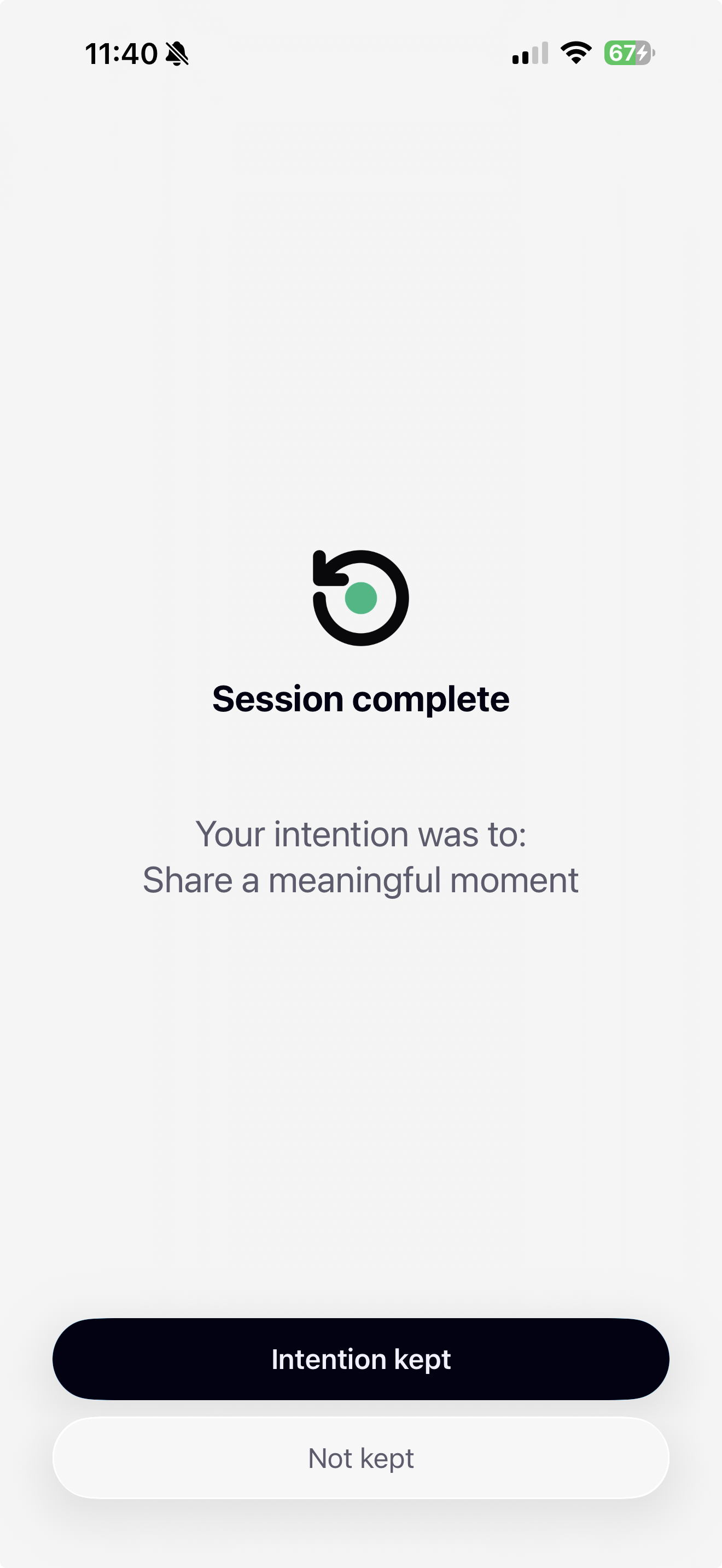
When their time is up, Return to Now closes the session and asks whether they kept their intention. It's a small moment of self-reflection that compounds over time, helping individuals recognize the difference between intentional use and getting carried away.

Step 05

Lasting change is a team sport.

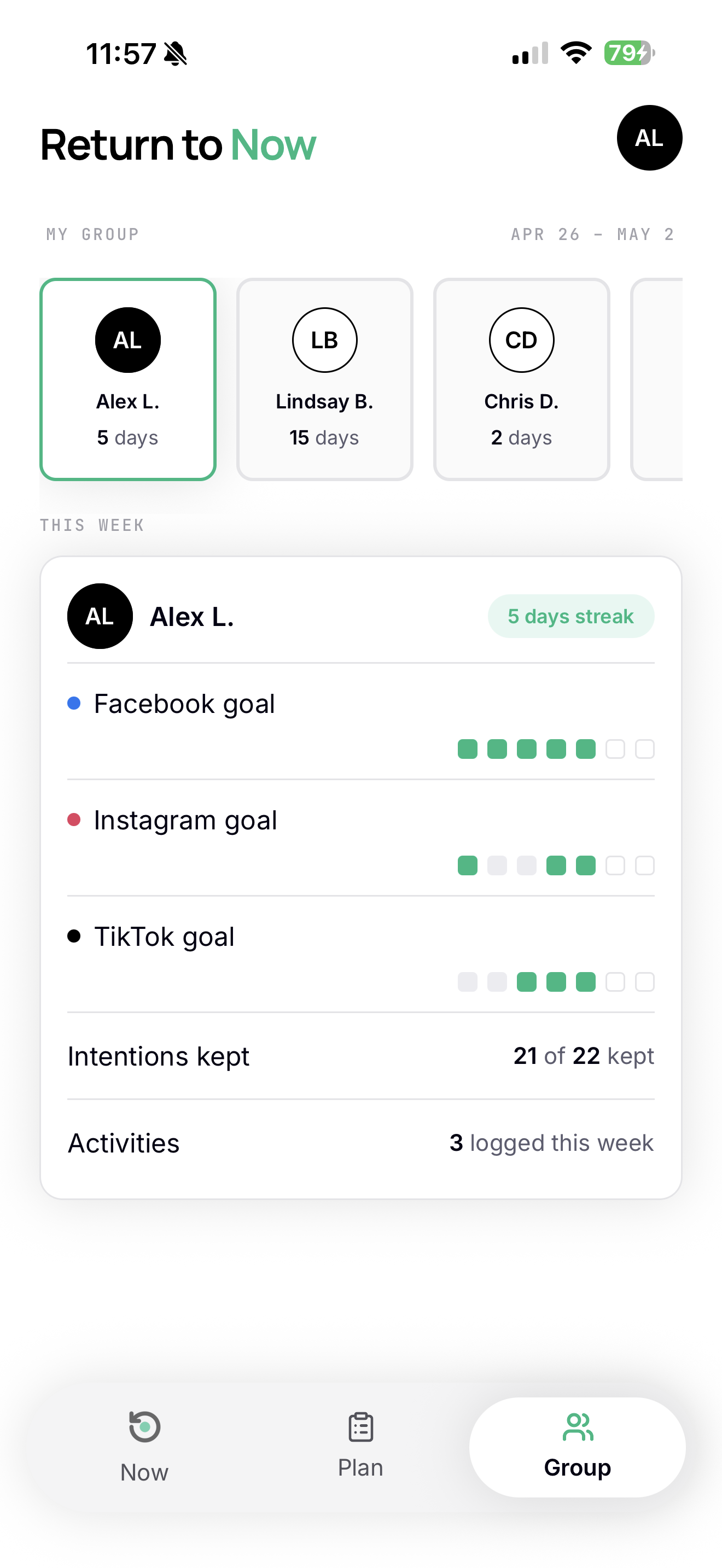
Every user gets free licenses to share with the people closest to them. A friend, a partner, a family member. They download the app, join the group, and work on it together. Shared progress, shared accountability, and a reason to keep going.
Better sleep Be present with the people I care about Actually focus when studying More time outdoors Make progress towards a goal Work on a creative project Learn a new skill
Home screen with the Return to Now widget before opening social apps
Intention prompt asking why you are opening the app
In-app session timer
Brief reflection after a session
Why it works

Screen blocking apps treat the symptom. Return to Now treats the cause.

Screen blocking apps
Treat the symptom
Block the app, ignore the urge. Willpower depletes and the habit comes back. Most users delete them within a week.
Return to Now
Treat the cause
Help people understand why they reach for their phone and build the intention to use it differently. Change that actually lasts.
"

Most people try to break habits by using willpower to not do the behavior, which is extremely difficult because the reward-based learning process is so powerful. Instead, we need to update that reward value by finding a bigger, better reward.

Dr. Judson Brewer, psychiatrist and neuroscientist, Brown University. The principle behind why Return to Now focuses on replacement, not restriction.
The philosophy

Built on behavioral science, not willpower.

Every feature in Return to Now is grounded in research on how people actually change their habits — not how we wish they would.

01
Pattern interruption

The widget creates a deliberate pause between the impulse and the action. That single moment of friction is enough to disrupt automatic behavior and return control to them.

02
Habit replacement

Your people identify what they want more time for before they restrict anything. The alternative is ready before the craving hits — replacing a behavior, not just removing one.

03
Implementation intentions

Stating "I will do X when Y happens" dramatically improves follow-through. Every intention set in Return to Now is a small, specific plan — which is exactly what makes them stick.

For your campus

A wellness benefit your students will actually want to use.

Each student gets free licenses to share with a roommate, friend, or family member. Accountability is one of the most reliable drivers of habit change.
Aggregate data only. You see enrollment and participation rates. Individual usage is always private.
Included for every student
What your students get
A
Student
Full app access
Included
+
Roommate or friend
Invited by student
Free license
+
Family member
Invited by student
Free license
Each student license includes additional free accounts. Your students see it as a benefit extended to the people they love, which is exactly what it is.
What your team will make time for
Be more present with the people I love Get more sleep Actually unwind after work Take better care of myself Be more focused at work Spend more time outside Read more books Make progress on something that matters to me Learn a new skill

Your students are struggling. There's a way to help.

We'll follow up within one business day.